

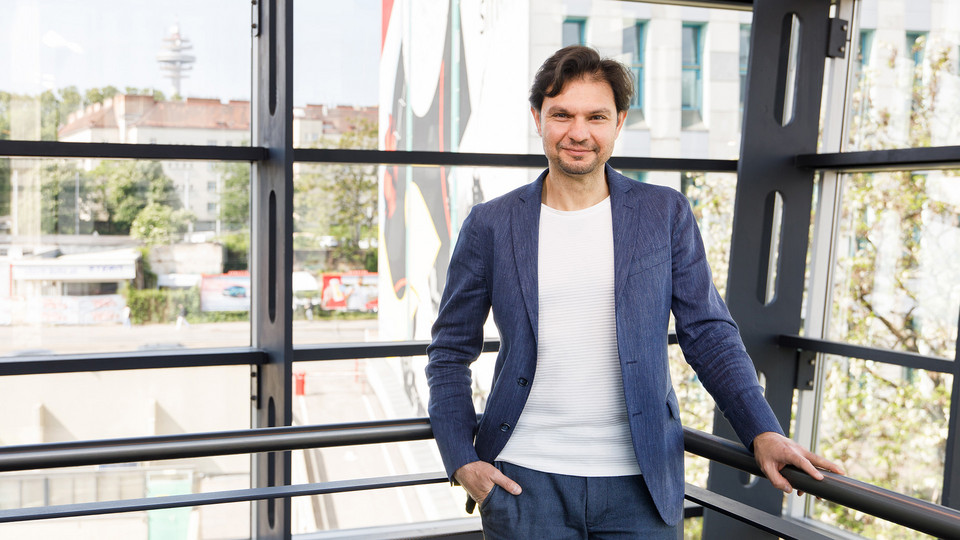
Group leader Erinc Hallacli. (C) Max Kropitz/Max Perutz Labs
(C) ASAP
Alpha-synuclein, a protein closely linked to Parkinson’s disease, has been widely studied in the context of its effects on membrane biology. However, though its dysregulation is also known to disrupt other key cellular processes, including RNA metabolism, the mechanisms remain poorly understood. The Hallacli lab will investigate if alpha-synuclein alters the function of RNA-binding proteins and whether these molecular changes can explain why some brain regions are more resilient to neurodegeneration than others. “We want to understand how alpha-synuclein perturbs RNA metabolism and how these changes can be used to explain resilience or vulnerability in Parkinson’s disease,” says Erinc. “By expanding our work beyond P-bodies to a broader network of RNA-binding proteins, we hope to uncover molecular mechanisms that could help explain differences in disease progression and patient outcomes.”
As part of a team led by Anna Krichevsky (Brigham and Women’s Hospital, Boston, MA, USA), the Hallacli lab will collaborate with leading researchers in the USA and Australia, each bringing access to unique patient cohorts, datasets, and clinical expertise in support of this global collaboration.
The project is supported by the Aligning Science Across Parkinson’s (ASAP) initiative, in partnership with The Michael J. Fox Foundation for Parkinson’s Research (MJFF). The team is joining the Collaborative Research Network (CRN), an international initiative that is on a mission to accelerate the pace of discovery for Parkinson’s disease research through collaboration, resource generation, and data sharing.
ASAP is expanding the CRN to map the biological blueprint of Parkinson’s disease and build a standardized toolkit of global research resources needed to turn discoveries into treatments. This next phase of the initiative focuses on understanding the heterogeneity of Parkinson’s disease, why it varies across individuals, and advancing discoveries toward more precise diagnostics and future therapies. This effort includes the generation of novel resources for the global research community to work from a common, high-quality baseline, reducing the technical hurdles that stall drug development.