

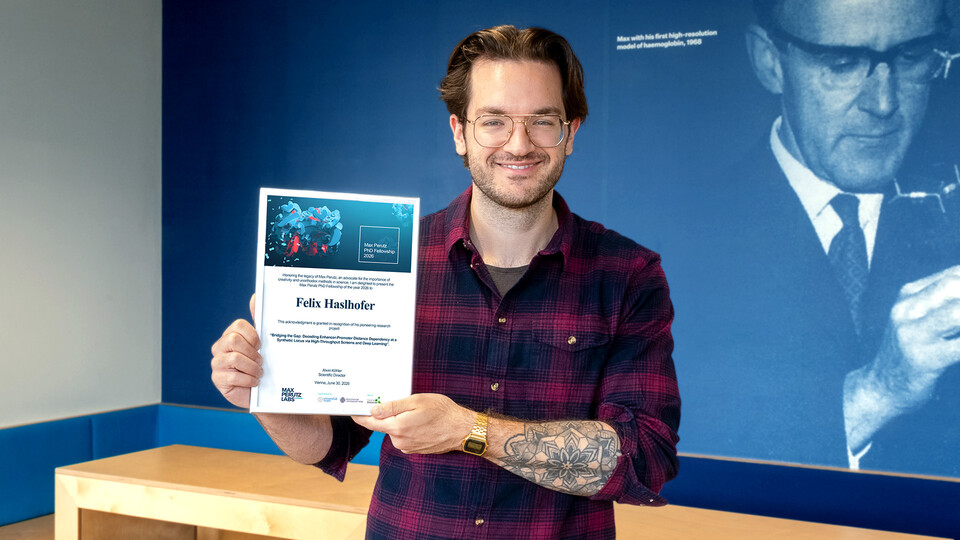
Precise control of gene expression is essential for development, cell identity, and human health. A central role in this process is played by enhancers – regulatory DNA elements that can activate genes from surprisingly large genomic distances. Despite their importance, however, it remains unclear how enhancers physically communicate with their target promoters across these distances. Felix Haslhofer’s project is aimed at decoding the principles underlying enhancer–promoter communication. Using a synthetic genomic locus in mouse embryonic stem cells, Felix will systematically test more than 10,000 potential regulatory elements at different distances from a target promoter. By combining high-throughput screening with deep-learning approaches, Felix seeks to uncover the sequence ‘grammar’ that determines how genomic distance influences gene regulation. “Because enhancers are often located far away from the genes they regulate, it has been historically challenging to understand how this communication works”, says Felix. “By systematically testing thousands of regulatory elements at different distances, we hope to identify the rules that govern enhancer activity and ultimately improve predictions of gene expression and disease-associated genetic variants.”
Felix studied Molecular Biology at the University of Vienna before joining the Bücker lab in 2023. Following his Master’s project, during which he established the experimental system underlying his current work, he decided to continue developing the approach as a PhD student in the lab.