

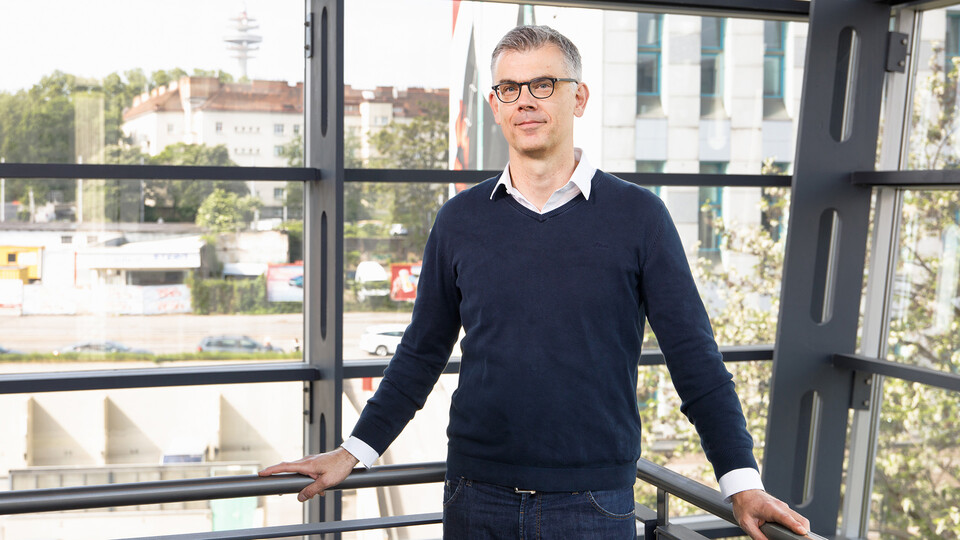
Frameshift mutations are among the most dramatic genetic alterations because they change nearly every subsequent amino acid in a protein, often introducing premature stop codons. However, recent work from the Žagrović lab has revealed that important properties of protein sequences, including hydrophobicity and disorder propensity, can remain surprisingly stable even after frameshifting. “Our findings suggest that frameshift mutations may preserve much more functionally important and even structural information than previously thought”, says Bojan. “This raises the possibility that productive frameshifts could be far more common in evolution than we currently assume.” To test this idea, the team will develop new computational methods to identify naturally occurring frameshifts across the tree of life and analyze their structural consequences using AI-driven structure prediction. Together with Perutz group leader Sebastian Falk and his team, the researchers will experimentally characterize selected frameshifted proteins, while collaborations with Andrew Firth from the University of Cambridge and Martin Mikl from the University in Haifa will focus on overlapping genes in viruses and humans as naturally occurring examples of frameshift-derived protein evolution. By uncovering how proteins tolerate and adapt to radical sequence changes, the project could fundamentally reshape our understanding of protein evolution and inform future approaches in protein design.