

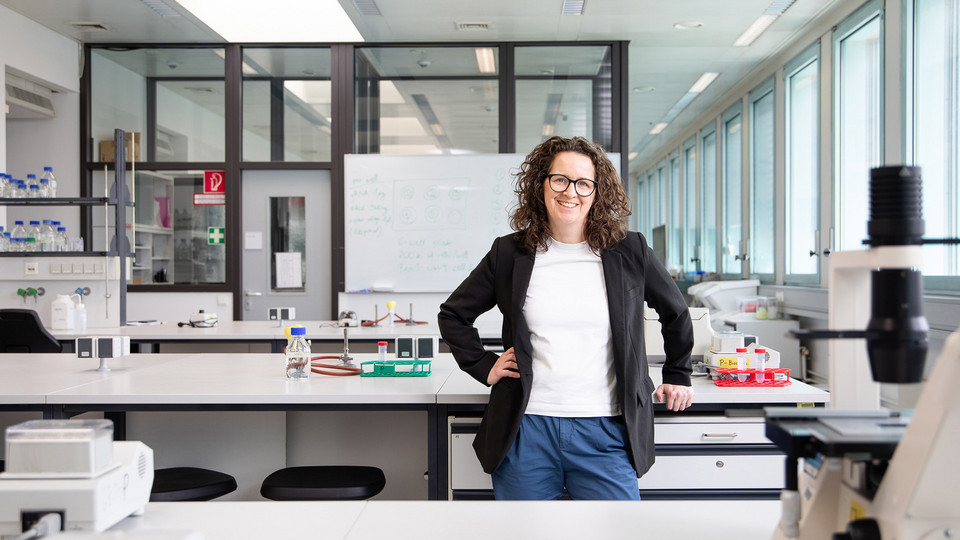
Perutz group leader Christa Bücker. © Max Kropitz/Max Perutz Labs
Much of the human genome does not encode proteins, yet these non-coding regions contain regulatory elements that determine the location, timing, and amplitude of gene expression. The new MSCA Doctoral Network ‘cisCODE’ aims to decipher this regulatory logic by combining genomics, artificial intelligence and synthetic biology. Its researchers will investigate how cis-regulatory elements are organized, how enhancers communicate with promoters in three-dimensional chromatin, and how these interactions shape gene regulation in contexts ranging from development and stress to inflammation and cancer. Perutz group leader Christa Bücker is part of the network, which will use approaches including single-cell multi-omics, high-throughput functional assays and advanced genome profiling to move from descriptive maps towards predictive models of gene regulation. For Christa, the people are what makes ‘cisCODE’ particularly exciting: “I am really looking forward to working with these excellent scientists, learning from them in our meetings and jointly supervising PhD students.”
The network is coordinated by Salvatore Spicuglia at Aix-Marseille University, brings together 13 academic partners and nine non-academic partners and has received €4.6 million over four years to fund 15 doctoral positions across Europe. The PhD researchers will receive three years of fully funded training, complemented by secondments in partner laboratories and industry, giving them access to expertise spanning gene regulation, developmental models, genomics and AI. At the Perutz, the recruited doctoral researcher will also be enrolled in the Vienna BioCenter PhD Program, allowing the MSCA network to complement local doctoral training with an additional European, interdisciplinary and cross-sector research environment.