On this page
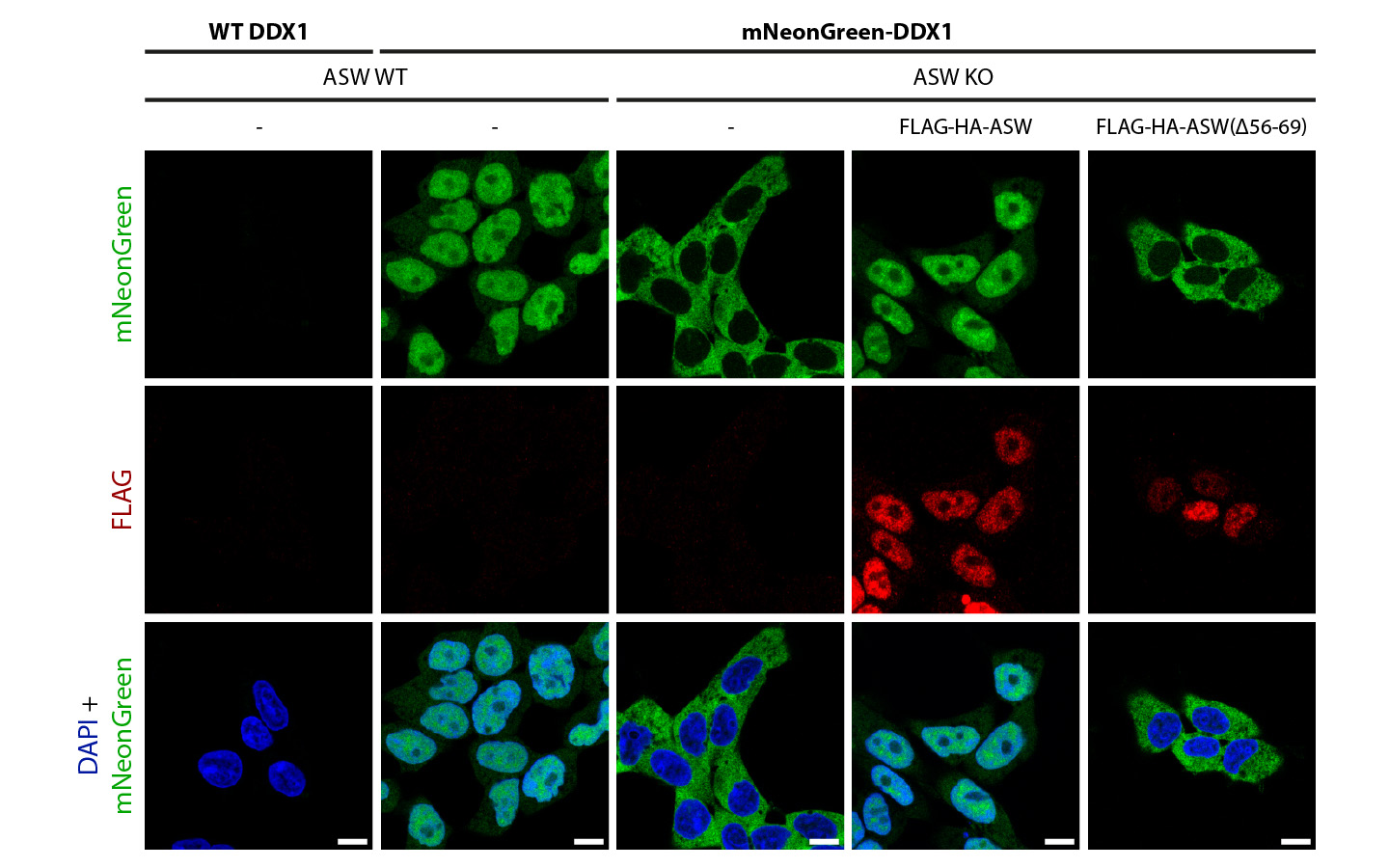
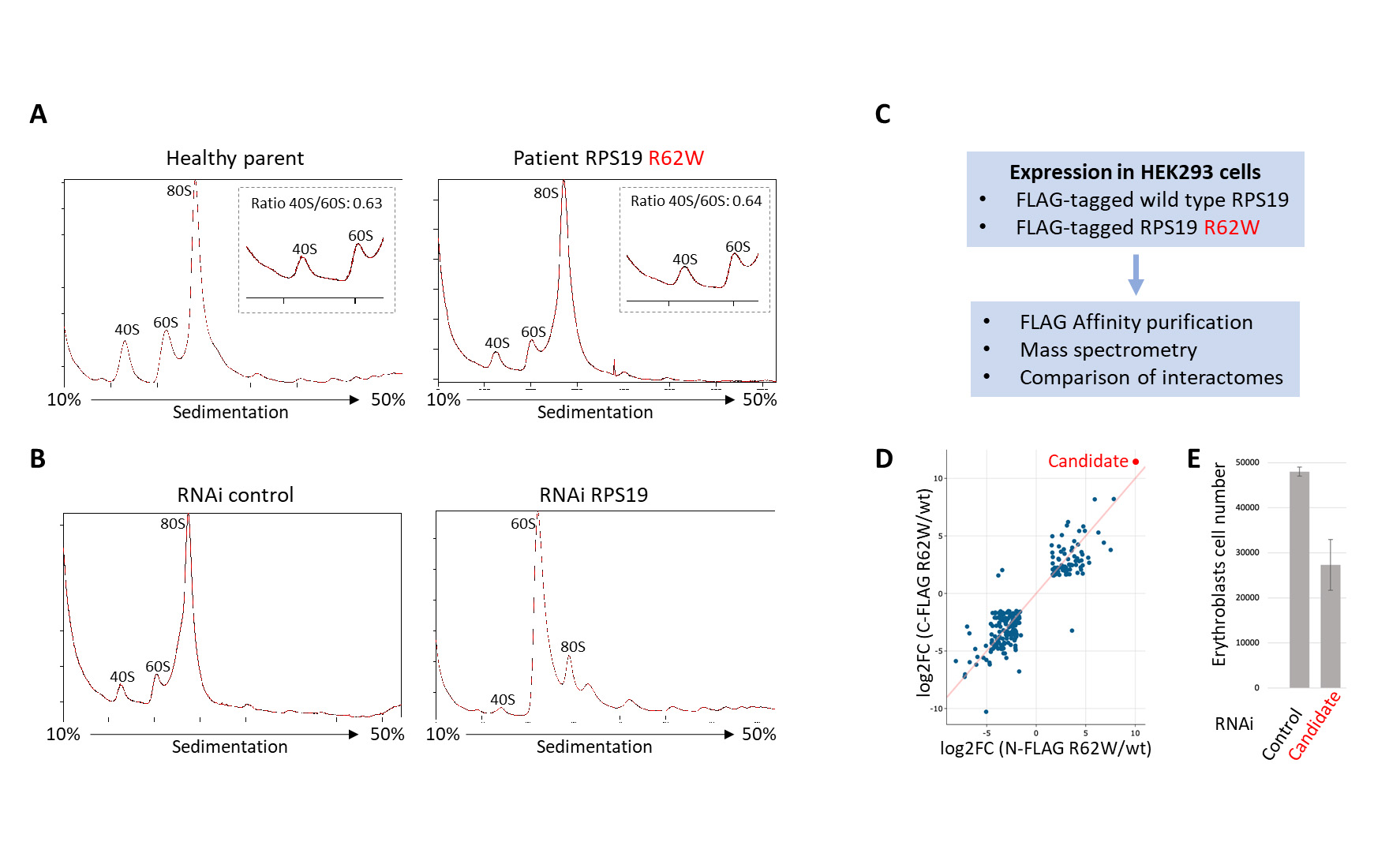
We are curious minds and therefore our interests evolve together with discoveries. Yet, the central topic persists: the processing of RNA molecules, and how defects may lead to disease. Within such a broad topic, we focus on “non-canonical RNA splicing”, driving splicing of pre-tRNAs and Xbp1 mRNA during the Unfolded Protein Response. We dissect these processes at the biochemical, cellular and structural levels. An overarching question is, which factors catalyze and regulate non-canonical RNA splicing? A central player is the tRNA ligase complex, which keeps surprising us with recent links to oxidative stress, dedicated isoforms in nucleus and cytoplasm, a particular degradation pathway, and a potential role in RNA export pathways. Through a privately funded project – dbaexperiment.org – and with a biochemical approach, we aim to reveal the molecular mechanism leading to Diamond Blackfan Anemia Syndrome (DBAS) caused by a missense mutation in RPS19.
The Martinez Lab uses molecular biology, biochemistry and bioinformatics to identify key players in RNA metabolism and study their functions. This “in vitro” approach is boosted by structural biology and proteomics. In vivo studies – mutating or deleting target genes – have been, and are being done through collaborations. In essence, the Lab embraces curiosity-driven, basic science with a keen interest in links to disease and potential cures.
Javier Martinez obtained his PhD in Argentina, characterizing “cruzipain”, a major cysteine-proteinase in Trypanosoma cruzi. As a Post-Doc, he turned into RNA biology to identify the poly(A) ribonuclease PARN and the RNA-induced silencing complex – RISC – in human cells. As a Junior Group Leader at IMBA, Javier and his team discovered and characterized the RNA kinase CLP1 and the tRNA ligase complex, and these findings redirected his laboratory towards non-canonical RNA splicing, an essential pathway for the maturation of transfer RNAs. Javier is a Group Leader at the Max Perutz Labs and Professor of the Medical University of Vienna. Long time ago (!) – Javier used to be youth champion of table tennis in Argentina. He is also a football (River Plate, Barcelona and Manchester City) and a Formula 1 fan, but group meetings do not deal with these topics…
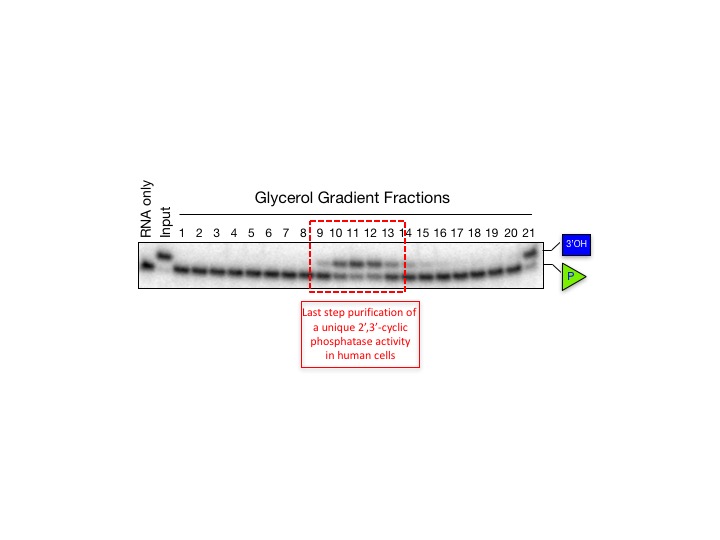
We have recently discovered the first 2’,3’-cyclic phosphatase in human cells. The enzymatic activity has been characterized and its structure revealed in collaboration with Martin Jinek, in Zurich. The novel and unique cyclic phosphatase is able to modulate pre-tRNA splicing and the UPR by hydrolysing the 2’,3’-cyclic phosphate at the end of 5’ tRNA exons and Xbp1-mRNA exons.
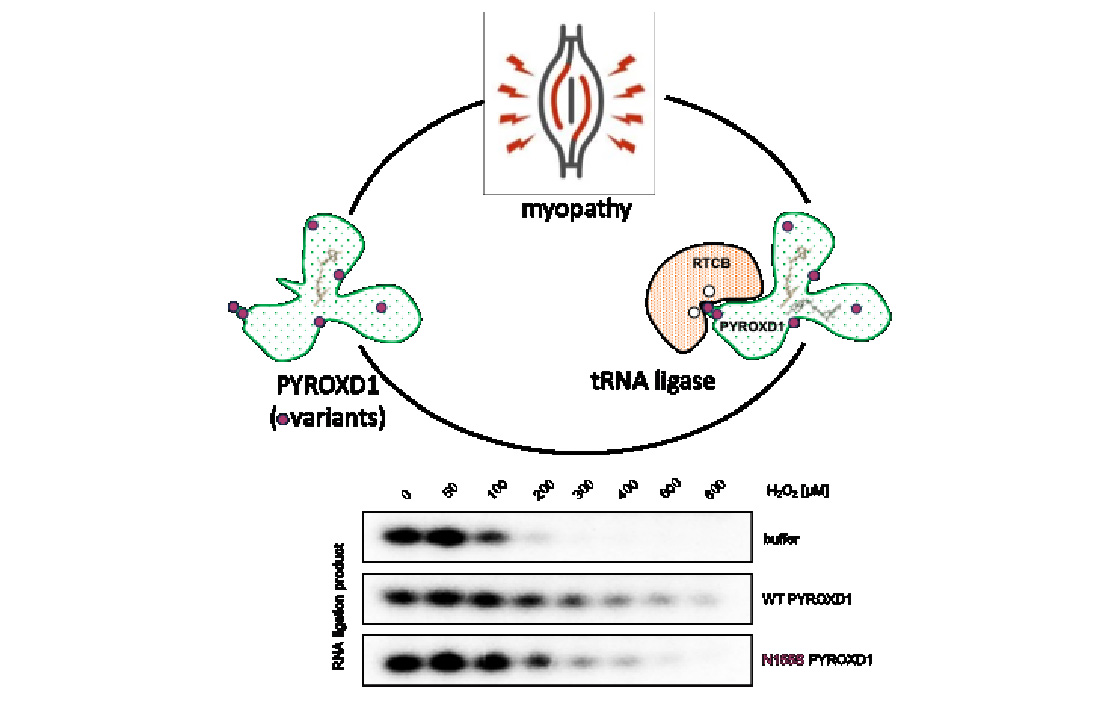
How did enzymes from Earth’s ancient anaerobic history, such as the RNA ligase RTCB, adapt to modern, aerobic environments? We have revealed an unexpected solution: RTCB, the catalytic subunit of the tRNA ligase complex co-evolved with a dedicated oxidoreductase, PYROXD1, which is linked to severe myopathies in humans. Paradoxically, PYROXD1 uses the principal prooxidative cofactor of the cell, NAD(P)+, as the ‘‘private’’ antioxidative protector of RTCB.
We are investigating the molecular mechanisms of Diamond-Blackfan Anemia (DBA), a disease characterized by a lack of red blood cell production which occurs shortly after birth. How and why do mutations in ribosomal proteins lead to this specific loss of red blood cells? We have recruited a family with two children who were diagnosed with DBA where the father carries a dominant mutation for DBA but does not present with the disease. Using a variety of techniques, we have been probing the effects of this particular DBA mutation within cells, and have established ex vivo red blood cell differentiation assays to validate our findings. See www.dbaexperiment.org.
We have identified CLP1 as a human RNA-kinase that phosphorylates siRNAs and tRNA 3’ exon halves at the 5’ end during in vitro pre-tRNA splicing. CLP1 is associated to the tRNA splicing endonuclease (TSEN) complex and is also part of the mRNA 3’ end formation machinery, with a still enigmatic function. Mutations in CLP1 lead to neurological diseases.
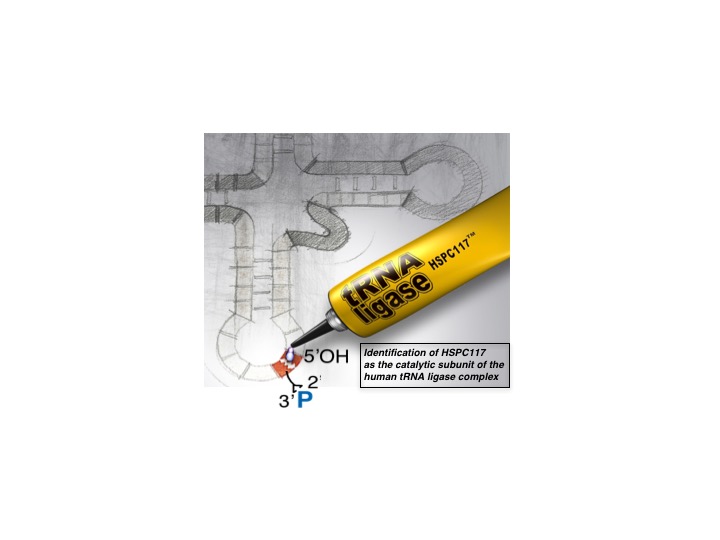
The process of pre-tRNA splicing requires removal of a single intron by the TSEN complex and joining of the resulting exon halves. The tRNA ligase activity remained elusive for three decades. In 2011, we identified HSPC117/RTCB as the catalytic subunit of the tRNA ligase complex. To catalyse multiple ligation reactions, the ligase requires Archease – also identified in our laboratory – as a co-factor. In addition, the tRNA ligase complex is responsible for the ligation of Xbp1-mRNA exons during the Unfolded Protein Response.
Muhammet Samet Özeren
Master Student
Room: 0.000
The oxidoreductase PYROXD1 uses NAD(P) as an antioxidant to sustain tRNA ligase activity in pre-tRNA splicing and unfolded protein response.
Asanović Igor, Strandback Emilia, Kroupova Alena, Pasajlic Djurdja, Meinhart Anton, Tsung-Pin Pai, Djokovic Nemanja, Anrather Dorothea, Schuetz Thomas, Suskiewicz Marcin Józef, Sillamaa Sirelin, Köcher Thomas, Beveridge Rebecca, Nikolic Katarina, Schleiffer Alexander, Jinek Martin, Hartl Markus, Clausen Tim, Penninger Josef, Macheroux Peter, Weitzer Stefan, Martinez Javier
ANGEL2 is a member of the CCR4 family of deadenylases with 2',3'-cyclic phosphatase activity.
Pinto Paola H, Kroupova Alena, Schleiffer Alexander, Mechtler Karl, Jinek Martin, Weitzer Stefan, Martinez Javier
Mechanistic basis for PYROXD1-mediated protection of the human tRNA ligase complex against oxidative inactivation.
Loeff Luuk, Kroupova Alena, Asanović Igor, Boneberg Franziska M, Pfleiderer Moritz M, Riermeier Luca, Leitner Alexander, Ferdigg Andrè, Ackle Fabian, Martinez Javier, Jinek Martin
Javier Martinez coordinates the doc.funds program “RNA@CORE, Molecular Mechanisms in RNA Biology” funded by FWF. Doc.funds projects are peer-reviewed, highly interactive research networks with a focus on the education of candidate PhD students, in parallel with the achievement of their Doctoral Thesis. July 2023 to June 2027.
The Group Martinez participates in the Cluster of Excellence “Excellent Brains” funded by FWF. The actual project investigates the “Functional interplay between the tRNA ligase complex and the RNA 3’-phosphate cyclase RTCA in neuronal RNA processing”. January 2025 to December 2029.
“The role of Ashwin, a subunit of the human tRNA ligase complex, in pre-tRNA processing and (m)RNA export”. July 2024 to June 2027.
“Ousted by metals: why is the tRNA ligase complex the prime target of a novel protein degradation pathway in human cells?” February 2026 to January 2029.